18 Oct 2026
Engineering Feats Along Historic Mountain Tracks and Their Lasting Regional Influence

Historic mountain tracks represent some of the most ambitious engineering projects ever undertaken, where builders confronted steep gradients, unstable rock, and extreme weather to connect isolated regions. These routes, carved through ranges like the Alps, the Andes, and the Sierra Nevada, relied on innovations in tunneling, bridging, and track stabilization that transformed how goods and people moved across continents. Data from transportation studies indicate that such infrastructure altered trade patterns and settlement densities in surrounding valleys, often within decades of completion.
Early Challenges and Technical Solutions
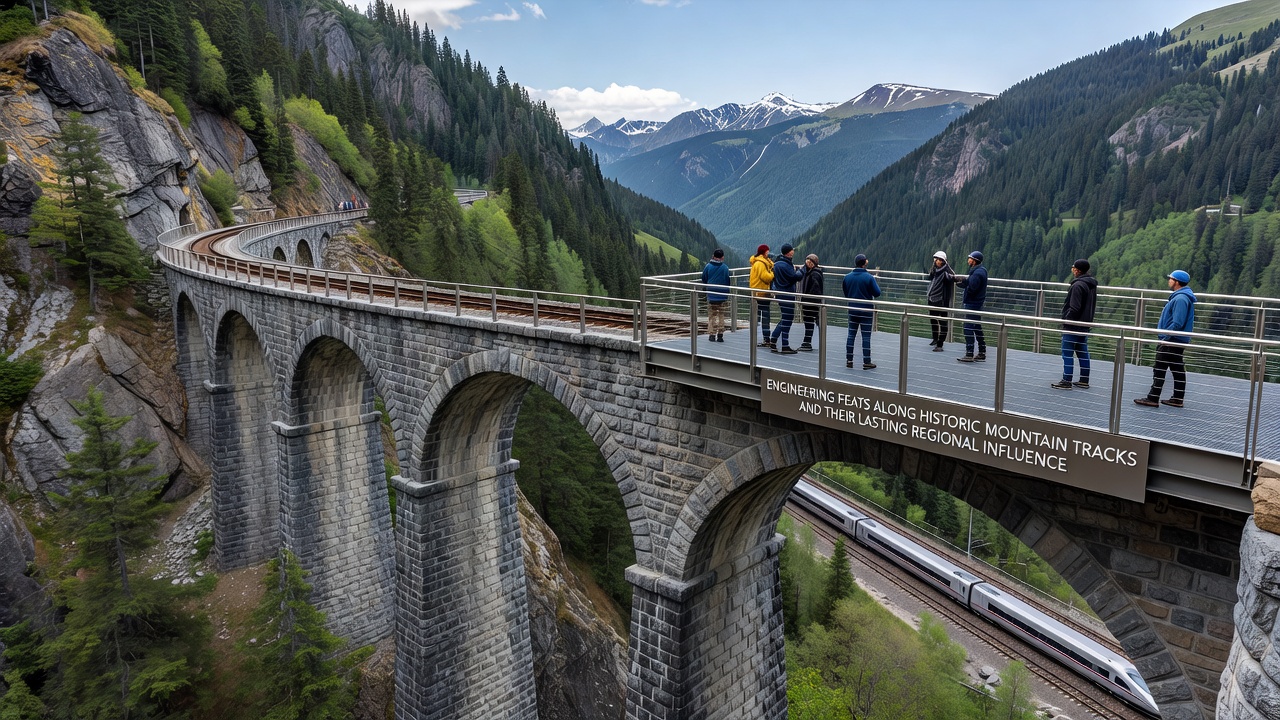
Engineers faced terrain that demanded precise calculations for gradients no steeper than sustainable for locomotives or carts, and they responded with spiral tunnels, avalanche galleries, and massive retaining walls. In the mid-nineteenth century, projects in the European Alps introduced the first long railway tunnels bored through solid granite, while similar efforts in South America adapted rack systems to handle slopes exceeding 5 percent. Observers note that these solutions emerged from iterative testing rather than single breakthroughs, with each completed section informing the next phase of construction.
Stone and iron bridges spanned deep gorges where earthworks alone proved insufficient, and workers installed snow sheds to keep lines open during winter months. Research compiled by geological surveys shows that these protective structures reduced service interruptions by measurable percentages in high-altitude corridors. The techniques spread across continents because builders documented methods and shared specifications at international conferences, allowing later projects to incorporate proven elements without starting from scratch.
Regional Connectivity and Economic Shifts
Once operational, the tracks shortened travel times from weeks to days, which in turn boosted mining output, agricultural exports, and seasonal labor migration. Towns located near new stations experienced population growth as supply chains stabilized, whereas bypassed communities sometimes declined. Figures released by national statistical agencies reveal that regions served by these lines recorded higher per-capita income growth in the first thirty years after opening compared with similar but unconnected areas.
Trade volumes increased because perishable goods could reach distant markets before spoiling, and industrial inputs arrived more reliably. Historians have traced how certain mountain valleys became specialized production zones after the tracks arrived, with local economies shifting from subsistence to export-oriented activities. Maintenance crews and station staff formed new permanent settlements, adding layers of infrastructure such as schools and telegraph offices that reinforced the initial engineering investment.
Modern Adaptations and Preservation Efforts
Many of these historic alignments remain in service today, though operators have upgraded signaling, electrification, and safety systems to meet contemporary standards. In October 2026, several alpine and Andean corridors are scheduled for joint engineering reviews aimed at assessing climate-related risks such as permafrost thaw and increased rockfall frequency. Planning documents indicate that these assessments will draw on long-term monitoring data collected since the original construction phases.
Restoration projects frequently reuse original masonry and timber elements where possible, while inserting modern reinforcement beneath visible surfaces. Tourism operators market the routes as heritage experiences, generating revenue that supports ongoing conservation. Studies conducted by transport research institutes demonstrate that preserved mountain tracks continue to deliver measurable economic returns through both freight movement and visitor spending, even as parallel highway networks handle higher volumes.
Conclusion
The engineering feats embedded in historic mountain tracks produced durable changes in regional economies and settlement patterns that persist more than a century later. Continued maintenance and adaptive upgrades ensure these corridors retain functional value while preserving the physical evidence of earlier construction methods. Data collected across multiple continents confirm that the original investments shaped development trajectories in lasting and quantifiable ways.