1 Nov 2026
Seasonal Shifts and Their Influence on Daily Routines in Alpine Settlements
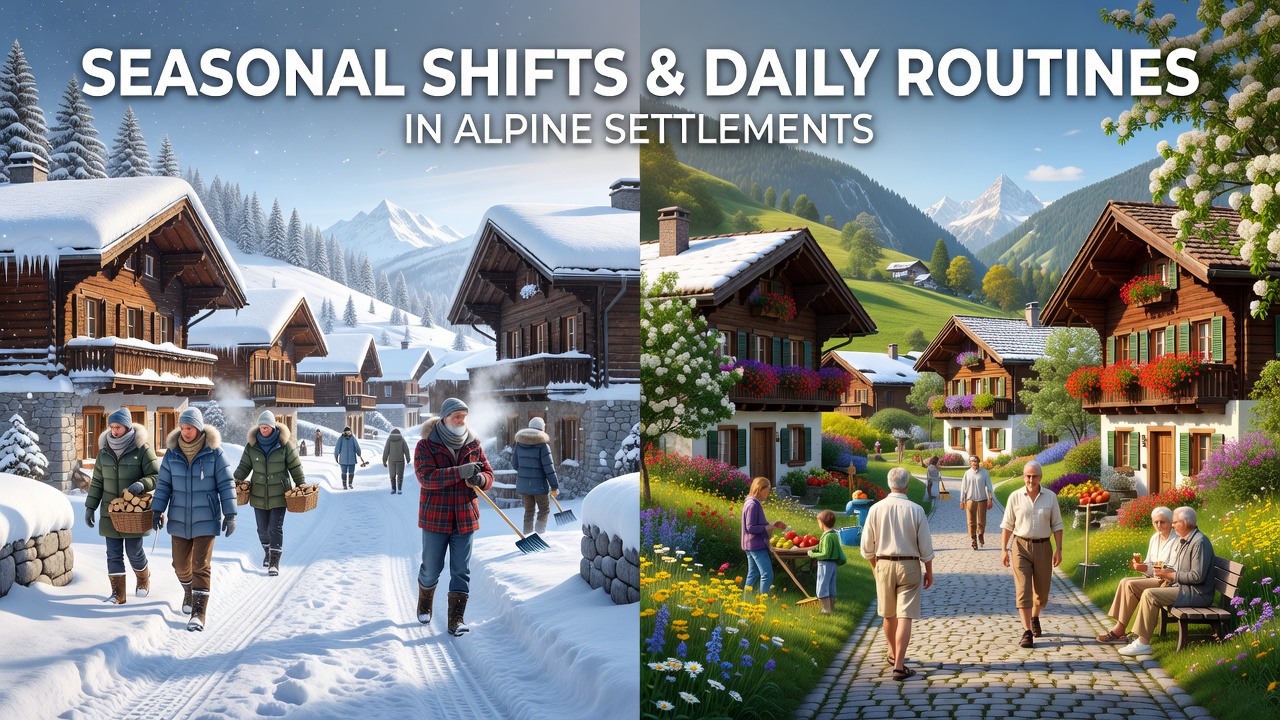
Alpine settlements experience pronounced seasonal shifts that reshape daily routines across work, travel, meals, and social patterns, with data from meteorological records showing temperature swings of 20 degrees Celsius or more between summer peaks and winter lows in regions like the Swiss and Austrian Alps. Communities adapt schedules accordingly, starting days earlier in summer to maximize daylight for agricultural tasks while shifting toward indoor activities as daylight contracts in fall and winter.
Summer Patterns in Mountain Villages
Longer daylight hours prompt earlier starts for farming and herding activities, where residents rise before sunrise to tend livestock and harvest crops before afternoon heat builds, and transportation networks expand with increased bus and rail services to accommodate tourism flows that can double local populations in peak months. Studies from the Swiss Federal Office for the Environment indicate that alpine areas see heightened water usage for irrigation during these periods, altering household routines around conservation measures and meal preparation that incorporate fresh seasonal produce.
Evening gatherings extend later into the night because of extended twilight, fostering community events tied to festivals that mark the height of the growing season, whereas transportation workers adjust shifts to handle increased foot traffic on trails and roads that remain open around the clock in many settlements.
Autumn Transitions and Preparation
As temperatures drop and daylight shortens by several hours each month, daily routines pivot toward harvest completion and winter stockpiling, with residents coordinating group efforts to gather timber and preserve food supplies that sustain households through colder months ahead. Observers note that school schedules in alpine villages often align with these changes, incorporating breaks for family labor during peak collection periods, while heating systems activate earlier each evening to maintain comfortable indoor environments.
November 2026 brought early snow accumulations to several high-elevation settlements, prompting adjustments in commuting patterns as road crews deployed winter maintenance equipment weeks ahead of typical timelines, and local markets shifted inventories to emphasize preserved goods over fresh outdoor produce. These shifts connect directly to broader climate patterns documented in reports from the European Environment Agency, where data shows increasing variability in autumn onset dates across the Alps.
Winter Adjustments to Limited Daylight
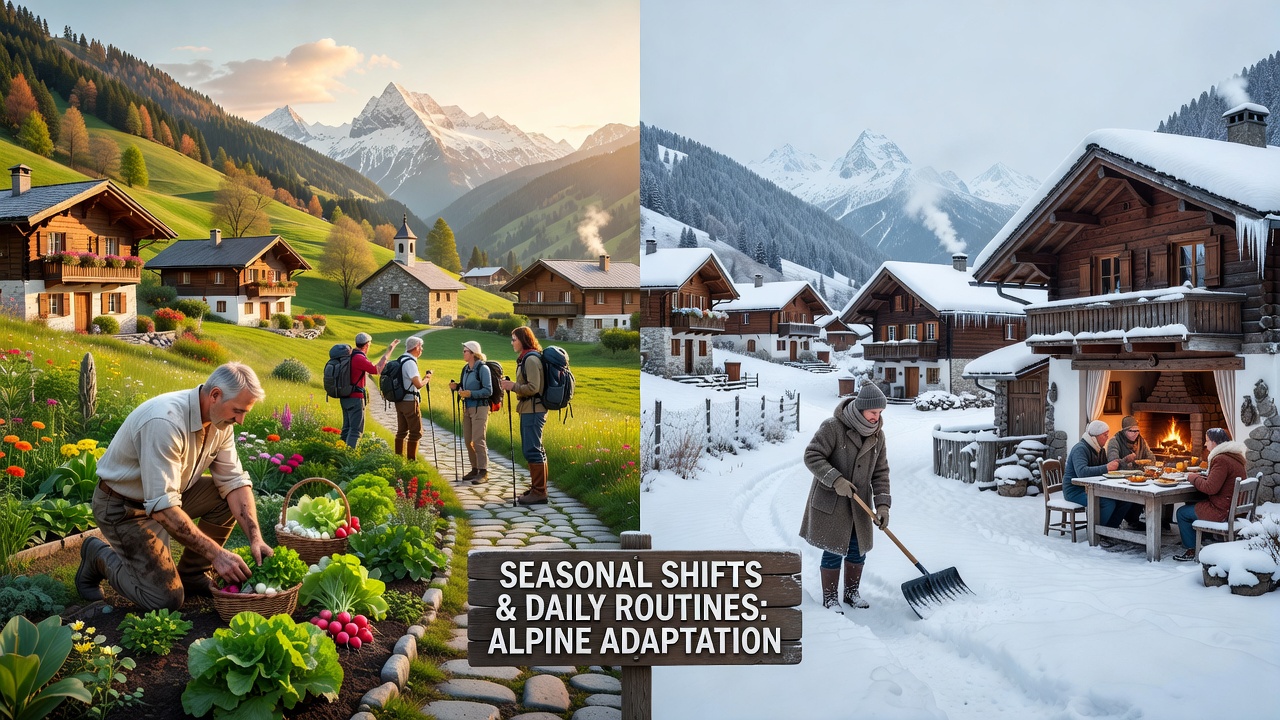
Shortened days and persistent snow cover lead to compressed outdoor work windows, where people complete essential tasks like animal care and snow removal during limited daylight before retreating indoors for extended periods focused on crafts, education, and maintenance of equipment. Public transport timetables contract accordingly, with services prioritizing school routes and essential supply deliveries over leisure travel, and energy consumption patterns reflect greater reliance on stored resources as documented in regional utility records.
Meal times often consolidate around midday to align with peak available light, while evening hours emphasize indoor social connections through shared activities that maintain community bonds despite isolation from neighboring valleys. Research from academic institutions such as the University of Innsbruck highlights how these routines have evolved over generations in response to consistent seasonal cycles, though recent decades show adaptations linked to changing precipitation levels.
Spring Renewal and Shifting Schedules
Melting snow opens pathways and extends workable hours outdoors once again, allowing gradual resumption of construction projects and trail maintenance that support both local economies and visitor access. Daily routines lengthen incrementally as daylight returns, with agricultural planning meetings resuming in village centers and transportation links expanding to connect settlements previously cut off by winter conditions.
Households transition from heavy reliance on preserved stores back toward fresh provisions as gardens thaw, and school calendars incorporate field activities that take advantage of improving weather, creating a rhythm that builds toward the full activity surge of summer months ahead. Figures from the World Meteorological Organization reveal consistent spring thaw trends across European alpine zones that influence these recurring adjustments.
Conclusion
Seasonal shifts continue to dictate the tempo of life in alpine settlements through interconnected changes in light, temperature, and precipitation that affect every aspect of daily operations from agriculture to social timing. Data collected over decades demonstrates how these patterns persist even as external factors introduce variability, with communities maintaining adaptive practices rooted in long-standing observation of their environments. The result remains a structured yet flexible approach to routines that aligns human activity with the natural cycles of high mountain regions.